pre-class

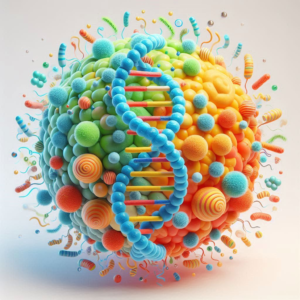
During replication and transcription a nucleic acid was copied to form another nucleic acid. Hence, these processes are easy to conceptualise on the basis of complementarity. The process of translation requires transfer of genetic information from a polymer of nucleotides to synthesise a polymer of amino acids. Neither does any complementarity exist between nucleotides and amino acids, nor could any be drawn theoretically. There existed ample evidences, though, to support the notion that change in nucleic acids (genetic material) were responsible for change in amino acidsin proteins. This led to the proposition of a genetic code that could directthe sequence of amino acids during synthesis of proteins.

Concept Description Genetic Code The set of rules by which information encoded in genetic material…

READ LESSON

Algae are chlorophyll-bearing, simple, thalloid, autotrophic and largelyaquatic (both fresh water and marine) organisms. They occur in avariety of other habitats: moist stones, soils and wood. Some of them also occur in association with fungi (lichen) and animals (e.g., on sloth bear).

Feature Description General Characteristics of Algae Common Name Algae Habitat Aquatic (freshwater and marine), moist…

READ LESSON

NCERT-NEET-Bryophytes include the various mosses and liverworts that are found commonly growing in moist shaded areas in the hills

Feature Description Common Name Bryophytes Habitat Moist, shaded areas, damp, humid localities, hills, stream banks,…

READ LESSON

NCERT-NEET-During the life cycle of any sexually reproducing plant, there is an alternation of generations between gamete producing haploid gametophyte and spore producing diploid sporophyte.

Life Cycle Type Definition Mitosis and Meiosis Sporophyte Gametophyte Examples (Haplontic) Organism spends most of…

READ LESSON

NCERT-NEET-Bacteria are the sole members of the Kingdom Monera. They are the most abundant micro-organisms. Bacteria occur almost everywhere. Hundreds of bacteria are present in a handful of soil. They also live in extreme habitats such as hot springs, deserts, snow and deep oceans where very few other life forms can survive. Many of them live in or on other organisms as parasites

Category Description General Characteristics Bacteria are the sole members of Kingdom Monera. They are the…

READ LESSON

NCERT-NEET-Algae are chlorophyll-bearing, simple, thalloid, autotrophic and largelyaquatic (both fresh water and marine) organisms. They occur in avariety of other habitats: moist stones, soils and wood. Some of them also occur in association with fungi (lichen) and animals (e.g., on slothbear).

Algae and their Main Characteristics Category Description Examples Habitat Chlorophyll-bearing, simple, thalloid, autotrophic, and largely…

READ LESSON

NCERT-NEET-characterisation, identification, classification and nomenclature are the processes that are basic to taxonomy.

Step Process Description 1 Characterization Scientists study and describe the morphology, anatomy, physiology, and other…

READ LESSON

DNA Replication – The Machinery and the Enzymes -NCERT-NEET-‘‘It has not escaped our notice that the specific pairing we have postulated immediately suggests a possible copying mechanism for the genetic material’’(Watson and Crick, 1953).

Step Enzymes Involved Details Prokaryotic vs Eukaryotic Differences Initiation Helicase, Primase Helicase unwinds the DNA…

READ LESSON

NCERT-NEET-classification within angiosperms to understand some of the concerns that influenced the classification systems. The earliest systems of classification used only gross superficial morphological characters such as habit, colour, number and shape of leaves, etc. They were based mainly on vegetative characters or on the androecium structure (system given by Linnaeus). Such systems were artificial; they separated the closely related species since they were based on a few characteristics. Also, the artificial systems gave equal weightage to vegetative and sexual characteristics; this is not acceptable since we know that often the vegetative characters are more easily affected by environment

Name of System Given by Basis Merits Drawbacks Artificial System Linnaeus Gross superficial morphological characters…

READ LESSON

NEET-NCERT-In Linnaeus’ time a Two Kingdom system of classification with Plantae and Animalia kingdoms was developed that included all plants and animals respectively. This system did not distinguish between the eukaryotes and prokaryotes, unicellular and multicellular organisms and photosynthetic (green algae) and non-photosynthetic (fungi)organisms. Classification of organisms into plants and animals was easilydone and was easy to understand, but, a large number of organisms did not fall into either category. Hence the two kingdom classification used for a long time was found inadequate. Besides, gross morphology a need was also felt for including other characteristics

Classification System Kingdoms Included Description Basis of Classification Very Early Classification – Non-scientific. Was done…

READ LESSON
1 3 4 5 6 7 12