pre-class

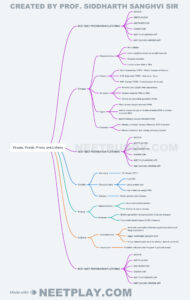
NCERT-NEET-In the five kingdom classification of Whittaker there is no mention of lichens and some acellular organisms like viruses, viroids and prions. These are briefly introduced here.

Type Characteristics Viruses – Non-cellular organisms with inert crystalline structure outside the living cell. –…

READ LESSON

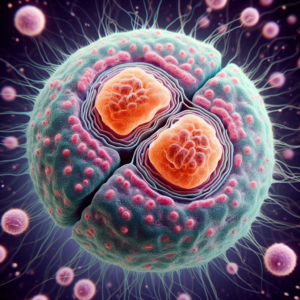
NCERT-NEET-Growth and reproduction are characteristics of cells,indeed of all living organisms. All cells reproduce by dividing into two,with each parental cell giving rise to two daughter cells each time they divide. These newly formed daughter cells can themselves grow and divide,giving rise to a new cell population that is formed by the growth anddivision of a single parental cell and its progeny. In other words, such cycles of growth and division allow a single cell to form a structure consisting of millions of cells

Stage Characteristics G1 Phase Interval between mitosis and DNA replication initiation. Cell grows and carries…

READ LESSON

NCERT-NEET-The morphology of the mycelium, mode of spore formation and fruiting bodies form the basis for the division of the kingdom into various classes.

Fungal Classes Comparison Characters Phycomycetes Ascomycetes Basidiomycetes Deuteromycetes Habitat Aquatic habitats, decaying wood in moist…

READ LESSON

R.H. Whittaker (1969) proposed a Five Kingdom Classification. The kingdoms defined by him were named Monera, Protista, Fungi, Plantae and Animalia. The main criteria for classification used by him include cell structure, body organisation, mode of nutrition, phylogenetic relationships and reproduction

Kingdom Cell Type Cell Wall Nuclear Membrane Body Organization Mode of Nutrition Main Criteria Secondary…

READ LESSON

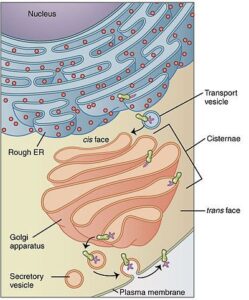
NCERT-NEET-The Golgi cisternae are concentrically arranged near the nucleus

Golgi Apparatus – Concentric Cisternae Near the Nucleus The Golgi apparatus is a key organelle…

READ LESSON

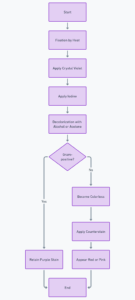
Bacteria can be classified into two groups on the basis of the differences in the cell envelopes and the manner in which they respond to the staining procedure developed by Gram viz., those that take up the gram stain are Gram positive and the others that do not are called Gram negative bacteria.

Gram staining is a method used to classify bacteria into two groups based on the…

READ LESSON

NCERT-Gregor Mendel, conducted hybridisation experiments on garden peas for seven years (1856-1863) and proposed the laws of inheritance in living organisms. Mendel published his work on inheritance of characters in 1865 butfor several reasons, it remained unrecognised till 1900.

Mendel’s Approach and Results Mendel’s Approach and Results Aspect of Mendel’s Approach Result Application of…

READ LESSON

NCERT-Emasculated flowers have to be covered with a bag of suitable size, generally made up of butter paper, to prevent contamination of its stigma with unwanted pollen

Emasculated Flowers and Butter Paper Emasculated Flowers and Butter Paper Using butter paper to cover…

READ LESSON

NEET-NCERT-Mitochondria (sing.: mitochondrion), unless specifically stained, are not easily visible under the microscope. The number of mitochondria per cell is variable depending on the physiological activity of the cells.Plastids are found in all plant cells and in euglenoides.

Mitochondria Line 1: Mitochondria (sing.: mitochondrion), unless specifically stained, are not easily visible under the…

READ LESSON

NEET-NCERT-Ribosomes are the granular structures first observed under the electronmicroscope as dense particles by George Palade (1953).

Ribosome Line 1: Ribosomes are the granular structures first observed under the electron microscope as…

READ LESSON
1 4 5 6 7 8 12